

Blog
A practical guide for hospitality spaces
4 min read
“
Stack, clean, store, and start again.
Getting a patio ready for winter doesn’t mean shutting it down. It’s more about adapting it to a season when the rules change a little.
In summer, an empty chair doesn’t stay empty for long. In winter, it might wait weeks for someone to sit down. Tables that seemed scarce in July suddenly feel like too many, the umbrella is no longer essential, and that corner everyone avoided because of the sun becomes, surprisingly, the most sought-after spot. Patios have seasons, too. The weather changes, and so does the way we use them.
For a bar, restaurant, or hotel, the arrival of colder weather is a good opportunity to look at the space differently. Getting a patio ready for winter doesn’t necessarily mean packing everything away. It means deciding what stays, what gets stacked, and what goes into storage. And taking the opportunity to care for the furniture before the next season begins.
01
You don’t have to store everything
A sunny patio can still be one of the best spots in a restaurant, even in January. A space exposed to the wind or with very little sunlight, on the other hand, can probably be scaled back until spring.
Sometimes, all it takes is resizing the patio. Keeping out only the tables you will actually use and storing the rest makes service easier, frees up space, and prevents furniture from being unnecessarily exposed to the elements. Plus, a patio with six occupied tables usually feels much more inviting than one with twenty empty ones waiting for guests.
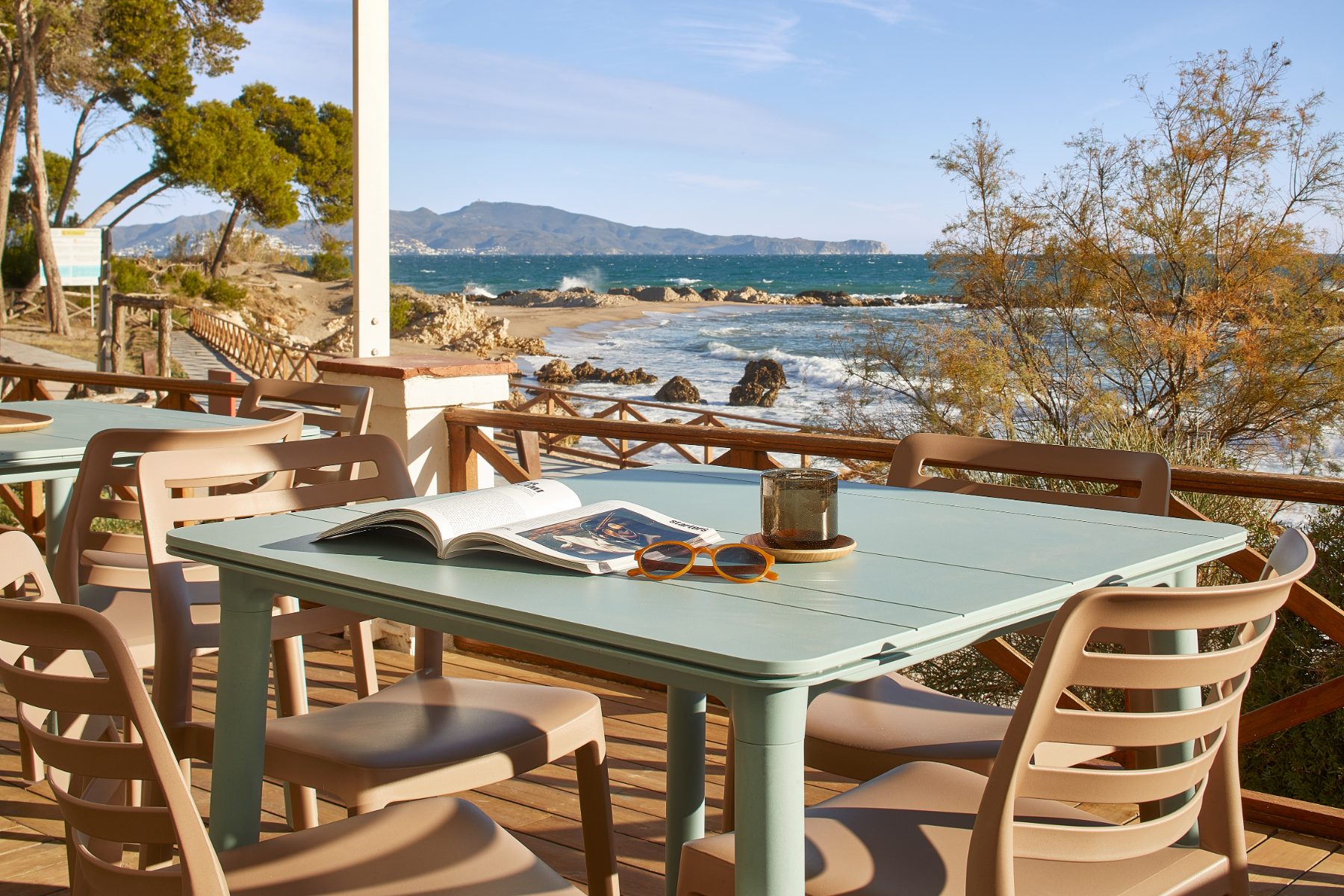
The spots that get the most sun are the ones that work best in the colder months.
02
Stacking means gaining space
In hospitality, the space a chair takes up when no one is sitting in it matters almost as much as how comfortable it is.
That’s why, when patio occupancy drops, stacking is one of the easiest ways to free up space. Chairs like Wind or Fresh, lightweight, durable, and stackable, make it easy to remove the pieces you don’t need in just a few minutes and bring them back out whenever you do.
It’s a practical feature year-round, but especially useful in winter, when a patio can change from one day to the next.
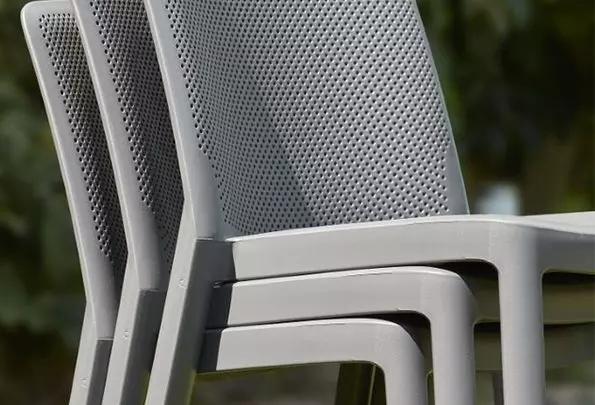
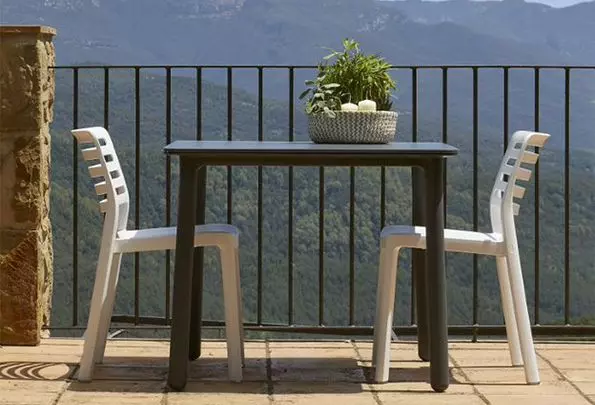
Stacked Fresh chairs and Wind chairs on a patio: put away in minutes and back out whenever you need them.
Two chairs designed to stack


03
Before storing, start with cleaning
There’s one simple rule that can save a lot of work when spring arrives:
The rule
Don’t store something dirty if you want to find it clean later.
After months of service, outdoor furniture collects dust, food residue, pollution, leaves, and small stains that can easily go unnoticed during the day-to-day rush.
Polypropylene has an advantage here. It’s easy to maintain: regular cleaning usually requires warm water, mild soap, and a non-abrasive sponge or cloth. Pay special attention to joints, legs, and less visible areas, where dirt tends to build up.
Then rinse and let everything dry completely before stacking or storing. No elaborate routine required. Water, soap, and a little time are usually all it takes.
04
Ready for winter
Cleaning, stacking, and storing what you don’t need helps protect your furniture and keeps the patio working better throughout the colder months. And when the longer days return, all that’s left to do is unstack the chairs, bring out a few more tables, and start again.